
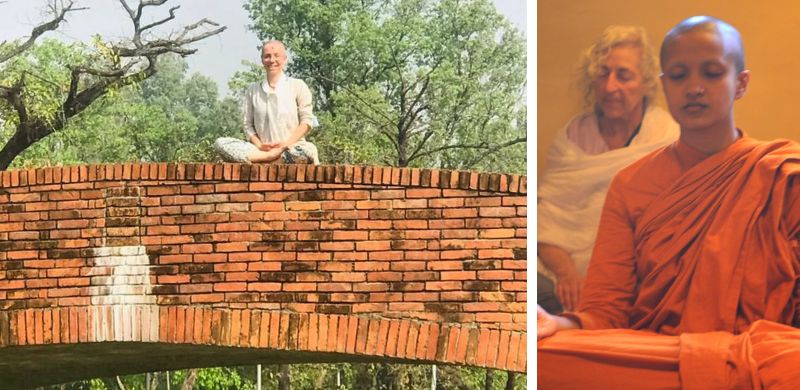
When someone tells us “just breathe,” our mind immediately wants to resist:
“What do you mean, just breathe? Aren’t we already doing that?”
But if we actually spend a few minutes paying attention to our breathing, we realize something big, there’s a huge difference between breathing and being aware of breathing.
The moment we truly feel our breath, something subtle happens, time slows down, sounds soften, and our body, like a light leaf in the wind, releases its heaviness.
The breath becomes a bridge, from thoughts, from hurry, from all the “shoulds”, leading us toward calm presence.
Let’s step together, gently and consciously, onto that bridge.
Why Breath?
Breath is the one thing that stays with us through every moment of our lives, yet strangely, it’s the thing we pay the least attention to.
We’re always breathing, but how often do we feel it?
When we become aware of our breath, the mind shifts out of autopilot and we reconnect with our body.
In that moment, the body begins to relax, the heartbeat slows, and intrusive thoughts fade away.
Studies show that slow, conscious breathing activates the parasympathetic nervous system, the body’s relaxation response, and increases the feeling of calm
In today’s fast-paced world, even our breathing gets caught up in the rush. Most of our breaths stay shallow, only reaching the chest. They don’t give our cells the chance to absorb enough oxygen or prana—the life-giving energy of the universe—nor do they help release built-up tension.

As you pay attention to your breath and start taking deeper inhales, your breathing muscles slowly grow stronger, and you begin to tap into the full capacity of your lungs. A complete breath moves through the belly, the ribcage, and even affects the area around the kidneys.
Let’s try it together right now: take a deep inhale… and a long, slow exhale.
How did that feel?
Now notice the rhythm of your breathing,the temperature of your inhale and exhale, the parts of your body that rise and fall with each breath. Just observing this can feel surprisingly grounding.
In yoga, we usually breathe through the nose unless there’s a specific reason not to. The tiny hairs inside the nose help warm the air so it’s closer to body temperature, filter out particles, and make it easier to absorb prana,the life force.
And if you pay attention, you’ll notice something interesting: your inhale feels cooler than your exhale.
What Is Pranayama?
Let’s move to one of the key parts of this journey: Pranayama.
You’ve probably heard the word before, but maybe never really knew what it meant.
Pranayama is an ancient yogic practice focused on conscious breathing, learning to direct and control the flow of breath with awareness.
The word Pranayama comes from two Sanskrit roots:
- Prana – life energy or vital force
- Yama – control or expansion
So, Pranayama literally means “the control or extension of life energy through breath.”
It teaches us how to breathe consciously, how to pause between inhale and exhale, and how to sync our rhythm with life itself.
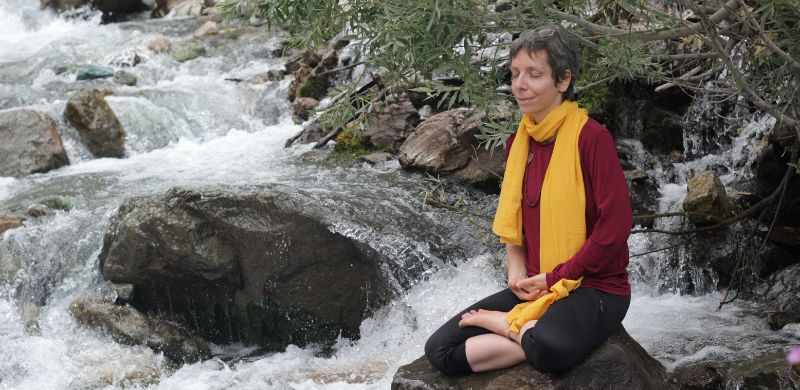
Research has shown that Pranayama can lower anxiety, reduce blood pressure, and improve lung function. In simple words, it’s like a reset button for the mind. Whenever things feel too loud or heavy, a few minutes of mindful breathing can bring us back to balance.
5 Types of Yogic Breathing to Try
We can all use a few simple and well-known pranayama techniques as a bridge to the present moment. These practices are easy, and you can try them at home or even while sitting at your desk:
Box Breathing (Sama Vritti)
A great place to start is box breathing—simple but surprisingly deep.
Inhale for four seconds, hold for four, exhale for four, and pause again for four.
This steady rhythm pulls the mind out of the noise and gently brings the body into calm.
Rhythmic Breathing
You can also choose a set rhythm and stick to it.
One of the most popular methods is 4–7–8 breathing:
inhale for four seconds, hold for seven, and exhale slowly for eight.
This one is perfect when you’re craving deeper relaxation—right before sleep or during anxious moments.
Nadi Shodhana (Alternate Nostril Breathing)
This is one of the simplest and most effective techniques.
With your right hand, close the right nostril and inhale through the left.
Then close the left nostril and exhale through the right.
Inhale again through the right, and continue this pattern.
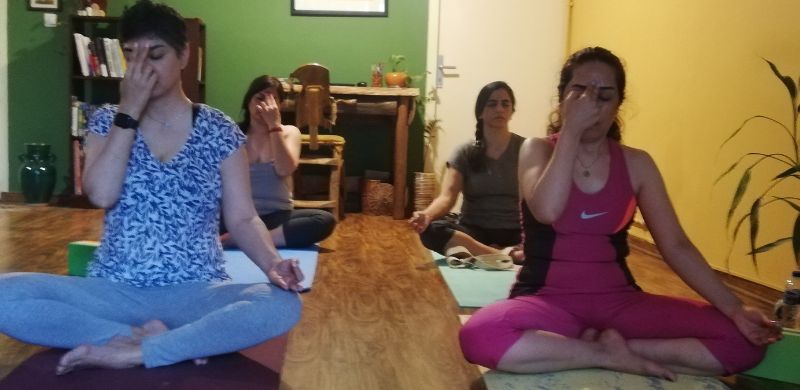
This practice helps synchronize the two hemispheres of the brain.
It boosts calm, focus, and balanced energy.
It can strengthen the immune system, regulate blood pressure, and is wonderful before sleep or anytime life feels overwhelming.
Bhramari (Bee Breath)
For this one, you make a soft “mmmm” sound—like a humming bee—during your exhale.
You can even close your eyes and gently press your thumbs over your ears so you only hear the vibration of your own sound.
This technique is incredibly soothing, almost like giving your brain a little sound massage.
Studies show Bhramari reduces heart rate and lowers stress levels.
It’s perfect when you’re irritated, overstimulated, or just exhausted.
(Just avoid it if you have an ear infection—otherwise, it’s safe anytime.)
Ujjayi (Victorious or Ocean Breath)
You’ll hear this one a lot in flow or vinyasa yoga classes.
You breathe through the nose, but slightly constrict the back of the throat on the exhale to create a gentle ocean-like sound.Ujjayi keeps your mind anchored in your body during movement so it doesn’t wander into thoughts.
It warms the body, builds internal heat, and honestly—it’s like having a tiny heater in your sleeping bag during cold nights in nature!
Breath, The Way Back to the Body
We spend so much of our time living in the mind, planning, analyzing, worrying.
But the body is always here, waiting for us to return.
When we breathe consciously, we’re telling the body, “I’m back. You’re not alone.”
Our breath connects directly to our emotions and nervous system:
when we’re angry, it’s short and sharp;
when we’re sad, it’s heavy;
when we’re happy, it flows freely.
Interesting fact: deep breathing activates the vagus nerve, which lowers heart rate and blood pressure, sending a powerful message of calm throughout the body.
Through Pranayama, we learn to use this connection between breath and emotion to restore balance from within.
The Taste of Being Present
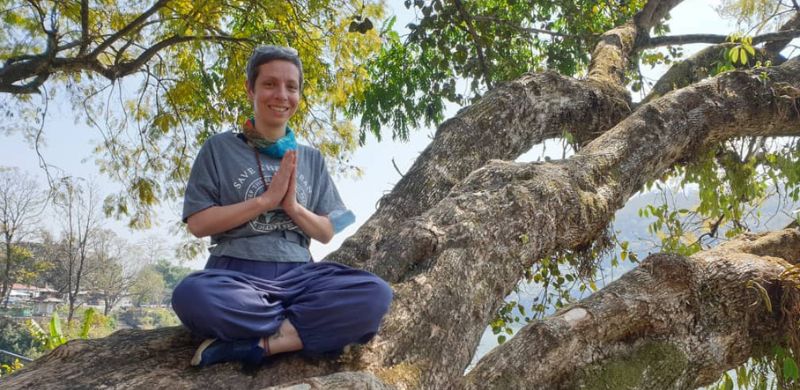
Being present means reading these lines and actually being here, not lost in plans or regrets.
It’s staying with whatever is happening right now, even if it’s just a single inhale and exhale..
Each time we move through these rhythms with awareness, it’s like being born anew, lighter, clearer, more alive.
Summary
We all breathe, but often forget we’re alive.
Mindful breathing reminds us how to slow down, soften, and truly be in the moment.
The breath is our bridge between body and being.
All we have to do is step onto it, take a deep inhale, and let the present moment welcome us home.
FAQ
My mind keeps wandering during breathing practice. What should I do?
That’s totally normal! Minds love to drift. Each time it happens, gently return your focus to your inhale and exhale, without judgment. That gentle returning is the practice.
How long should I practice breathing exercises when starting out?
Five minutes a day is enough to begin. Even a few conscious breaths can shift your mood. Start small, but stay consistent, quality over duration.
Can Pranayama replace meditation or yoga?
Not exactly, but it can open the door to both. Conscious breathing teaches us how to quiet the mind and listen within, it’s the natural foundation for meditation.
Your email address will not be published. Required fields are marked *
Comment Remaining characters: 300